

Car wax builds a layer on top of the paint to protect the finish, increase reflectivity, add gloss, and resist water and contamination. Unlike polish which removes imperfections, wax simply protects and provides shine.
Understanding the difference is critical as polish, wax, sealant, and cleaner often blend into one when you are trying to achieve a shiny vehicle. Knowing the role wax plays helps you decide which wax to buy and whether to polish before waxing.
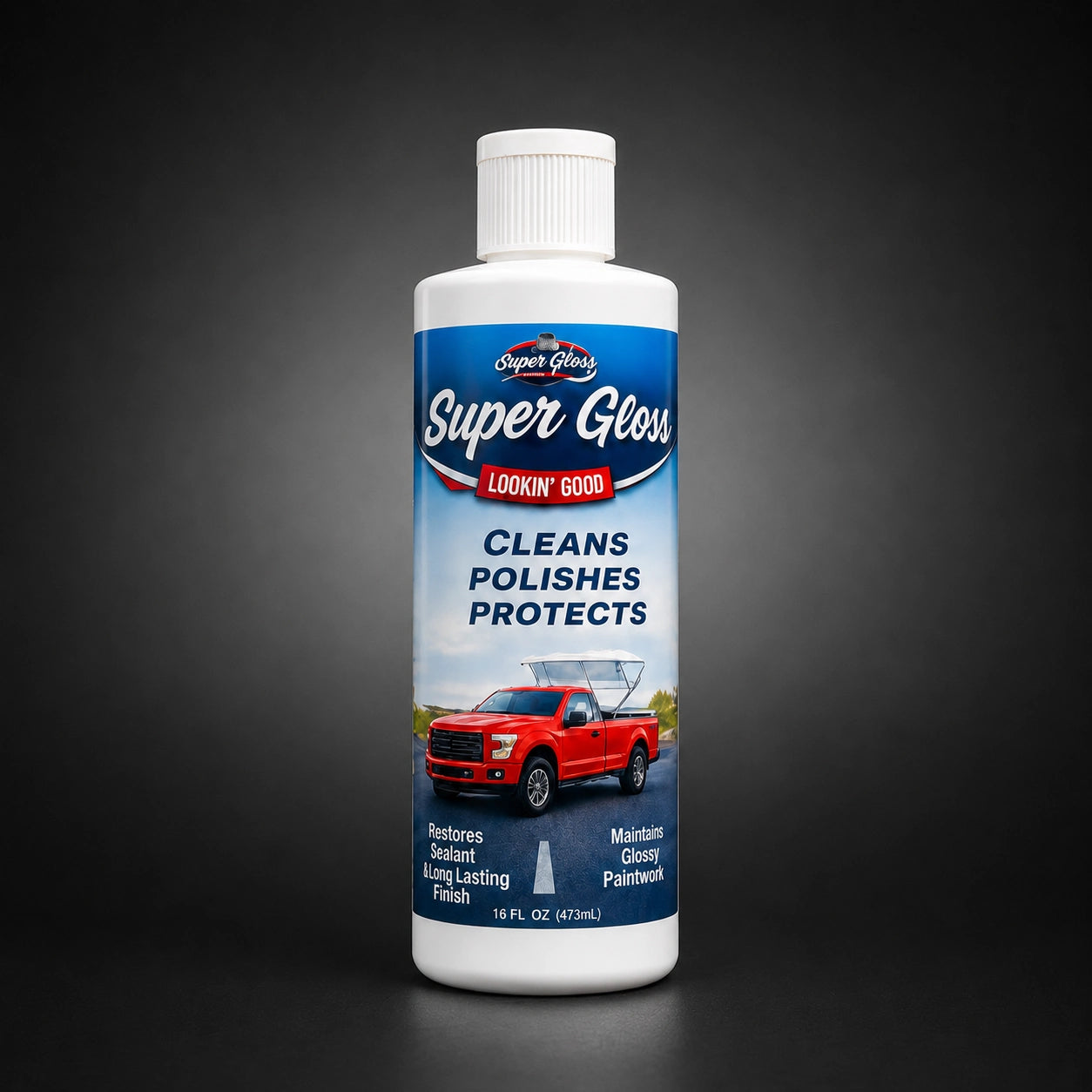
One Polish. Multiple Surfaces.
Skip the need for separate detailing products. Super Gloss combines cleaning, polishing, shining, and sealing in one multi-surface formula.
For a healthy paint waxing is one of the easiest ways to keep the vehicle shiny in between detail services.
What Does Car Wax Do?
The primary purpose of wax is to protect.
A correct application builds a protective barrier on the painted surface. This barrier provides a degree of protection from some of the contaminates a vehicle commonly encounters during normal use including grime, dirt, road grime, water, bird droppings, tree sap, and other common irritants.
Wax also adds reflectivity and gloss. A properly prepped surface can reflect more light, and wax can build upon this by adding a smooth protective layer that also alters how light strikes the surface to create a smoother looking finish.
It should be stressed that a waxed finish is still susceptible to environmental damage and the protective qualities are only temporary. A layer of wax will not make automobile paint scratch-proof or impervious from environmental damage. It simply adds a layer between the paint and the elements.
Does Wax Make A Car Shine?
Enhanced gloss is also a primary benefit of waxing a vehicle.
The surface after being properly prepared can reflect light more efficiently. Waxing the vehicle leaves a smooth protective layer on top of the paint. This changes how light strikes the surface and can result in a deep gloss. The overall appearance of the vehicle can be made to look cleaner, more reflective, and shinier.
Gloss is only one aspect of the overall appearance but it does play a vital role in the look and feel of a vehicle's finish. However, the underlying paint quality does impact the outcome, as a heavily oxidized, scratched, or marred surface will not benefit as much from the added protection and reflectivity of wax.
If the paint is defective, has oxidation, swirls, water spotting, or minor scratches, those issues must be dealt with before applying any protective finish. Super Gloss explains that polish is used to correct surface imperfections whereas wax or sealant is used to protect the corrected surface.
It is not about simply masking those imperfections. If the surface requires correction, the appropriate steps should be taken to restore the paint. Then the finish can be protected using the super gloss wax or a similar protective product.
Does Wax Protect Car Paint?
Wax builds a temporary protective barrier over the paint.
Vehicles are exposed to sun light, water, dust, road grime, bird droppings, tree sap, and other common outdoor irritants every time you drive or park it outside. A layer of wax provides some level of protection between the paint and those irritants.
Some waxes and sealants take it a step further by encouraging water to bead on the surface, reducing the amount of exposure.
It should be stressed that waxing does not prevent every damage, so stones will still chip the paint, and deep scratches will ruin the finish. Think of it as just another step to prolong the life of the paint rather than making it impervious to damage. It will gradually wear off as the vehicle is washed and exposed to the elements.
Does Wax Protect Against UV Rays?
Vehicles are subject to excessive UV exposure when parked outside for long periods of time.
Properly applied protective finishes can build a barrier between the paint and the elements. High quality car polish such as Super Gloss explains that its polish and sealant leave a protective coating designed to offer protection from UV rays, moisture, and other contaminates.
However, wax is not necessarily a replacement for proper parking and paint maintenance practices.
Whenever possible it is best to ensure the vehicle is kept in a shaded and preferably enclosed garage to reduce the amount of UV exposure the vehicle experiences. The same goes for moisture, as a correctly applied car wash can reduce the impact of those elements on the paint.
Proper paint care is an ongoing process and wax is only one of the many steps that should be taken at regular intervals.
Does Wax Remove Scratches?
Traditional wax does not remove scratches from automotive finish.
It appears to be one of the most misunderstood aspects of waxing because wax can make the vehicle look cleaner and more shiny, but it cannot remove surface imperfections.
Polishing works by using abrasives to refine the paint finish and correct minor imperfections by removing a layer of the clear coat paint. Super Gloss explains that polishing can be used to correct surface imperfections such as light scratches, swirls, oxidation, and other common flaws.
Wax then provides a protective barrier to prolong the corrected surface's appearance.
If the vehicle does have light scratches it may benefit from polishing to reduce their appearance before waxing to prolong the corrected look. If the vehicle is in good condition, the paint should not need to be polished at all.
What's The Diffrence Between Wax And Polish?
The major difference is simple: polish corrects, wax protects.
Polish is a corrective product and depending on the type it can address light scratches, swirls, and oxidation. It can also reduce the appearance of water spots and other minor imperfections on the surface.
Wax serves a completely different purpose of adding a protective layer on top of the clear coat to prolong the corrected appearance and protect against environmental contaminants. This means that you should not polish the car every time you want a shine because it can wear off the clear coat, removing a layer of paint in the process.
Super gloss recommends polishing as a corrective measure rather than using it as a regular replacement for wax.
Should You Polish Before Waxing?
Polishing should be performed before waxing if the paint requires correction.
The reason is simple: wax creates a protective barrier. If you polish after waxing, the polishing process simply removes the protective layer.
The correct procedure is to first wash the vehicle, remove bonded contaminants if necessary, and correct the surface imperfections if needed. Then the appropriate protective product can be applied.
Not every car needs these steps in order to shine. If the vehicle is in good condition, there may not be reason to polish before waxing. It should also reduce the amount of clear coat material removed during the polishing process.
How Does Wax Help With Water?
Wax plays a major role in making water roll off the surface.
After it is applied most products will cause water to form beads rather than laying across the surface like a sheet. One of the easiest ways to tell if a vehicle has been waxed is to observe how water behaves on the surface.
It also makes rinsing and cleaning the vehicle a bit easier. The fact that it causes water to bead is also a good indication the product was applied correctly.
However, the level of beading should not be considered the sole factor of whether protection is adequate or not. In most cases, the surface will continue to bead after the product has worn off the paint. Similarly, less beading does not mean the paint is unprotected.
Observe how the water behaves as an indicator rather than trying to determine the level of warranty based on the amount of beading.
Can Wax Make A Car Easier To Clean?
A properly applied smooth protective layer can help with regular cleaning.
Contaminants have less chance of bonding to the surface, and the layer itself makes it easier to remove those who do. Essentially, by reducing the surface area, wax reduces the likelihood that it can become dirty. It also limits the amount of direct exposure a contaminant can have on the paint.
It should be stressed however that a waxed car still requires cleaning. Contaminants and dirt need to be promptly removed using the appropriate auto washing products and cleaning towels.
Proper washing is a fundamental part of caring of the paint which waxing is designed to protect.
How Do You Apply Car Wax?
The exact application procedure varies depending on the product, so it is best to always follow the manufacturer's instructions.
As a general rule, it should be applied to a clean, dry surface. Wash and thoroughly dry the paint before applying any protective products.
Apply to smaller sections at a time, working on a cool surface if the instructions call for it. Allow the product to cure the recommended amount of time. Buff off the residue with a clean microfiber cloth.
For example, Super Gloss instructs to first test the product on an inconspicuous section and to apply a small amount with a soft cotton or microfiber cloth. Let it dry for 15 to 30 minutes, then buff the surface clean.
Using excessive amounts of the product will not necessarily provide greater protection. In most cases, it is best to err on the side of less product, especially with regard to application and removal.
How Often Should You Wax A Car?
Every vehicle has different needs and there is no indication that every vehicle should be waxed every 6 months.
Some cars spend the majority of their time outside where they are subjected to intense sunlight, rain, snow, salt, ice, road grime, and other damaging elements. These vehicles will require more frequent protection. Meanwhile, a car that spends the majority of its time in a garage where it is driven occasionally requires less frequent protection.
The regular washing schedule has a major impact on how often you need to reapply wax.
The correct procedure is to determine the product's expected protection window after it has been properly applied and cured. If the finish no longer exhibits the expected characteristics as described by the manufacturer and the recommended window since the last service has passed, it may be time to clean and reapply.
Following the manufacturer's instructions is more important than a standard waxing schedule because every product is different.
What Should You Look For In A Car Wax?
The choice of the product depends on what you're looking for in vehicle protection.
Ensure the product is compatible with your paint, easy to apply and remove, and provides the protection you need. It should also provide gloss, water beading, and long lasting durability.
Owners who want more from their finish in fewer steps may want to try an all-in-one polish and sealant. Super Gloss explains that its car care product is an all-in-one formula designed to clean, polish, shine, and protect a variety of surfaces including automobiles.
The correct option depends on what you are looking for, what level of correction is needed, and how much effort you are willing to invest in the process.
Common Mistakes When Waxing A Car
Washing a vehicle and applying wax are both integral parts of paint care. Some mistakes can be avoided by simply knowing what not to do when waxing a car.
One of the most common mistakes is to apply wax on a dirty surface. Dirt embedded in the paint can easily be picked up by the applicator, causing additional surface imperfections. Another common mistake is to apply more product than necessary to achieve better results. This will make it harder to buff off the excess as it will likely bond to the paint surface directly.
Working in direct sunlight or on a very hot surface can also cause issues depending on the product. Some people fail to use wax to correct imperfections. While a waxed surface can look nice, it is intended to protect a properly prepared surface.
Finally, using clean cleaning, application, and buffing materials are also important. Dirty towels can ruin an otherwise perfect car detailing job.
Does Every Car Need Wax?
It depends. Many vehicles can maintain a proper exterior protection using a variety of products including traditional waxes, advanced synthetic sealants, and other innovative surface finishes.
Wax is still popular because it is easy to apply and provides an impressive level of gloss and surface protection. The most important consideration when choosing a product is to pair it with the paint condition and proper maintenance schedule.
If the paint is in good condition, it should not require an excessive level of maintenance. Frequent washing and protection may be enough to maintain the proper appearance. On the contrary, if the paint is dull, it may require some level of correction before waxing to enhance appearance.
It should come down to the condition of the paint and the overall appearance rather than whether wax is necessary.
Also Read: How to Polish Aluminum Engine Parts?
Final Thoughts
So, what does wax do for a car? It protects the paint from environmental damage, increases reflectivity and adds gloss, encourages water beading, and reduces overall exposure from every day contaminants. It does not remove scratches or correct damaged paint. It prolongs the corrected appearance. Basically, it protects a clean, properly prepared paint surface.
For the best results, always prepare the surface correctly and polish only as much as needed. Then apply the wax as directed by the manufacturer. Super Gloss embodies these concepts in its all-in-one formula designed to restore and protect a variety of surfaces. It includes both corrective and protective agents to enhance the appearance and prolong the corrected look.
A properly maintained car does not need frequent complex detailing procedures to look amazing every day. Regular cleaning, washing, correcting imperfections, and applying wax can keep it looking awesome without spending hours in the garage every week.


