

Washing your chrome wheels with a mild car shampoo, rinsing and leaving fully dry. Apply a polish to the chrome that is suitable. Using a soft microfiber cloth polish the chrome slightly with a separate clean cloth. Finally apply a suitable protecting wax or sealant that is approved for chrome.
Over time, chrome wheels can become dirty with water spots, road grime, brake dust and become dull. Road salt and other corrosive materials can also cause issues if left on your chrome wheels. By regularly cleaning and polishing your wheels carefully you can keep your chrome looking shiny.
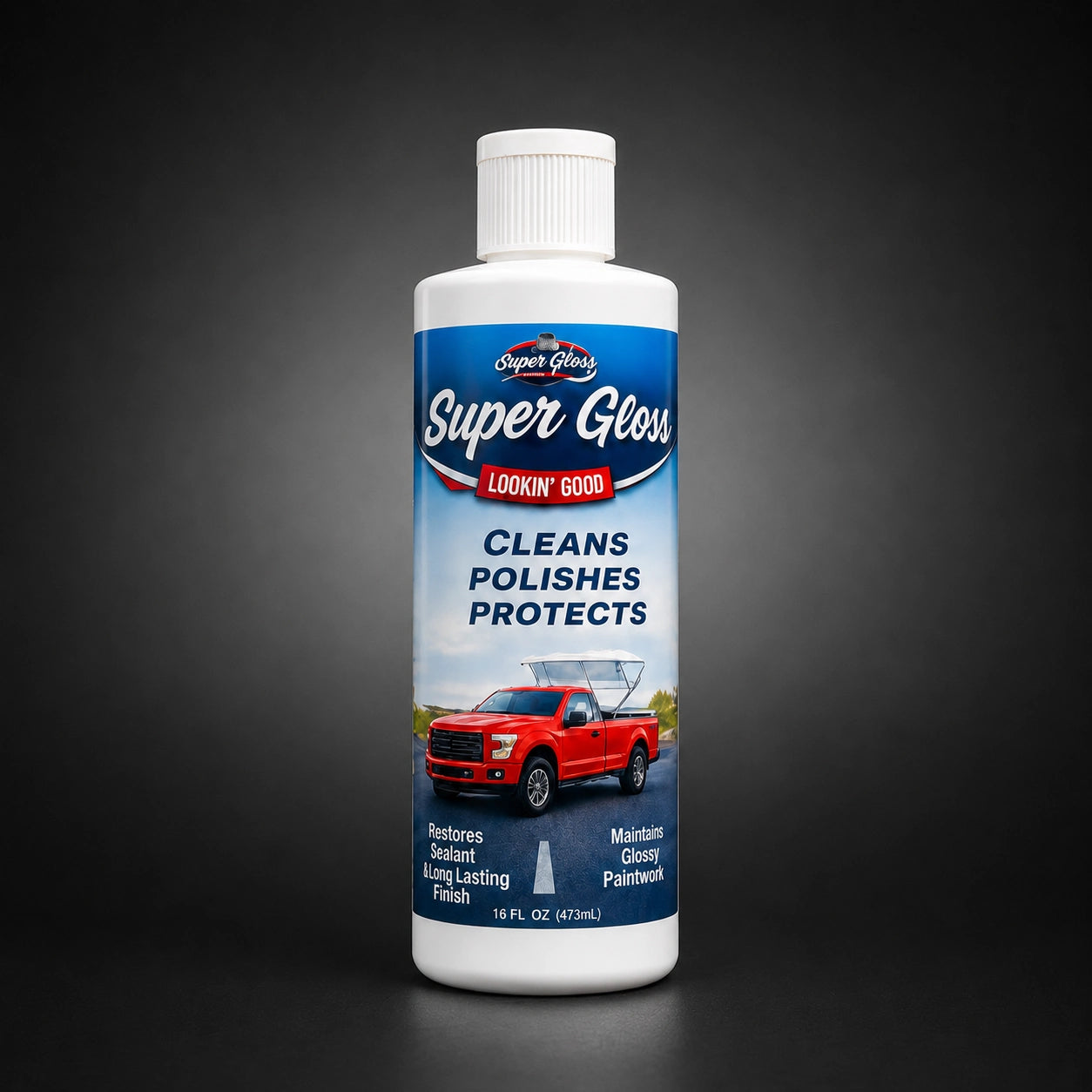
One Polish. Multiple Surfaces.
Skip the need for separate detailing products. Super Gloss combines cleaning, polishing, shining, and sealing in one multi-surface formula.
This process can take a little more care than just washing your wheels. Chrome wheels have a thin layer of chrome over the base material. Using harsh chemicals, abrasive items and scrubbing vigorously can cause permanent damage. Knowing how to clean them properly and what products to use can make a big difference.
Why Do Chrome Wheels Become Dull?
Chrome wheels can become dirty for a variety of reasons like any other wheels but since the chrome reflects light you will notice the dirt quicker. Brake dust can build up around the spoke and lug nuts. Road grime can get into tight areas and mineral deposits can form from the evaporation of water. Road salt can cause extra corrosion issues, especially if you drive in the winter or live in a coastal area.
If your wheels are dirty or show signs of water spots the shine can be hidden. Corrosion in small areas can cause dark spots. If left with moisture and dirt on your wheels then corrosion can occur.
Sometimes your chrome wheels will not need polishing. Simply washing carefully and drying your wheels can help. However if there is a layer on the surface and slight staining then polishing can help. If the chrome plating is flaking, peeling or there is deep pitting and lots of corrosion then you will not be able to polish it.
Polaris recommend washing regularly with a mild detergent, rinsing thoroughly and polishing occasionally with an automotive grade product. Avoid using abrasive cleaners.
Polishing Chrome Wheels - Products Required
Mild car shampoo, clean water, soft wheel brush, small detail brush, microfiber cloths and chrome wheel polish that is suitable for chrome plated wheels. You may want to use a wax or sealant suitable for chrome.
Some products will claim to be an all in one polish and wax. However it can vary between products and may not be suitable for all types of wheel finishes. Ensure the product is labelled as being suitable for chrome plating.
Super Gloss Sealant offer Grandpa Bosch's Super Gloss Polish and Sealant. This can be used on a variety of surfaces to clean, polish and protect. The instructions state to test on a small area. Shake the bottle, apply a small amount to a soft cotton or microfiber cloth and leave to dry for 15-30 minutes. Buff with a clean cloth. Check the product is suitable for your chrome wheels.
Avoid using steel wool, scourers, abrasive brushes or harsh wheel cleaners unless specifically approved by the manufacturer. Ensure your wheel cleaning cloths are not the same as those used on your cars paintwork to avoid any scratches from the grit and brake dust.
Step 1: Ensure Wheels Are Cool
Always start with cool wheels. If you have just been driving then leave them to cool down. If you apply water or any cleaning products to a hot surface it can cause quick drying and spotting.
Park in a shady area giving yourself enough space to work around each wheel. If you are in direct sunlight then your cleaning products and polish may dry out too quickly. Ensure you can work in the shade.
Check your wheels are not peeling, bubbling, deeply scratched, corroding or damaged around the edge.
Step 2: Rinse The Wheels
Start by thoroughly rinsing your wheels with clean water. Ensure you get into the gaps between the spokes, around the lug nuts, centre cap and inner barrel of the rim.
Now wash your wheels with a mild car shampoo. Use a soft wheel brush for larger areas and a smaller detail brush for tight areas. Be gentle with your chrome wheels to lift any dirt.
Avoid using strong acidic products, harsh alkaline products and abrasive products unless specifically approved by the wheel manufacturer. Some products can cause issues with chrome plated wheels if they are very dirty. Follow the instructions from the wheel manufacturer and check the product label.
Ensure you rinse your wheels thoroughly. Any soap suds or trapped dirt can cause streaking. If your wheels are still dirty then gently wash again.
Step 3: Dry The Chrome
Dry your wheels using a clean microfiber cloth. Ensure you dry across the face of the rim, spokes and around the lug nuts. Any trapped water in tight areas can cause new marks.
By drying your wheels you can also see if there are any issues with the chrome. In good lighting you can see if there are water spots, dirt or corrosion. Check your whole wheel before polishing.
Avoid polishing your wheels if they are still dirty. Unless specifically stated in the instructions. A clean dry surface will help the polish go on smoothly.
Step 4: Check Surface And Test Polish
Check your wheels are dry. Look for any remaining haze, water spots, light staining and dull areas. If your chrome looks bright then you may not need to polish.
If you need to polish your chrome wheels, then use a non-abrasive product that is approved for chrome plated wheels. Check the label before using. If your wheels have painted details, clear coated areas or a mix of finishes, then ensure the product is suitable. Some products may be suitable for bare metal but not all plating or coatings.
Test on a small area. Apply a small amount using a soft cloth. Follow the instructions for applying and removing. Check under good lighting.
If your finish becomes hazy, discoloured or scratched then stop using the product. Follow the instructions to remove.
Step 5: Polish In Small Sections
Once you have tested and confirmed the product is suitable. Start polishing small sections. Apply a small amount of polish to a clean microfiber applicator or soft cloth.
Be gentle when applying. Follow the instructions. If the instructions state to leave to dry then do so.
Avoid scrubbing harshly or polishing the same area. The chrome plating is thin and can be damaged if you use too much abrasion. It is better to apply gently multiple times if the instructions state it can be.
Take care when polishing tight areas such as the spokes and lug nuts. Too much polish can build up in these areas. Use a suitable soft applicator and remove any residue.
This should only be done to improve the look of the finish. If the chrome is flaking, deeply pitted or has come away from the wheel then polishing will not help.
Step 6: Buff To A High Shine
Buff your wheels using a separate clean microfiber cloth. Be gentle and ensure you are always using a clean section of cloth.
Continue until all residue is removed. Your chrome should now have a clear shine. Check your wheels from all angles as it can be difficult to see any streaking.
If there are still some dull areas then check them. There may be some dirt still on and you will need to gently polish again. If there are mineral deposits then use a product designed for this. If there are deep pits, peeling or missing plating then it will generally need to be professionally refinished.
Once your wheels look clean and even wipe around the edges and any accessible areas to remove any residue. Take your time to check.
Step 7: Protect The Chrome
Using a suitable wax or sealant can help protect your chrome. Ensure the product is approved for chrome. Follow the instructions. Do not assume a product designed for painted panels on your car will be suitable.
Ensure you are using a clean surface. Use a soft applicator and apply evenly. Remove any excess as instructed. Avoid applying to any brake rotors, pads or other braking components. Never apply a slick product to the tyre treads.
This doesn't mean you don't need to maintain your chrome but can make it easier to keep clean. Ensure you regularly wash and dry your wheels, especially if you drive in wet conditions, road salt or store outside.
Common Mistakes
Don't polish without washing. Rubbing dirt and brake dust can cause scratches. Wash thoroughly and rinse.
Using the wrong cleaning product. Using harsh chemicals and abrasive products can cause damage. Ensure it is suitable.
Using dirty cloths. Gritty dirt can cause fine scratches. Use clean microfiber cloths and change when dirty.
Applying too much pressure. Scrubbing harshly won't fix any damaged plating. Be gentle and let a suitable product do the work.
Don't ignore road salt. Salt and other corrosive materials can cause issues. Wash your wheels as soon as possible and dry thoroughly.
Don't expect polish to fix serious issues. It may improve any dullness but won't replace any missing chrome. Get a professional to check.
Also Read: What Element Is Used To Create The Shiny Finish On Cars?
FAQ
How Often Should I Polish My Chrome Wheels?
Only polish if washing isn't helping you achieve the desired shine. By regularly washing and drying you can reduce how often you need to polish.
Can I Use Regular Car Wax?
Only if it is approved. Some automotive waxes and sealants are suitable for chrome wheels.
Can I Polish Rust Off Chrome Wheels?
It may improve the look of any surface dirt but rust can indicate damage. If it keeps coming back, spreading or appearing with pitting or peeling then polishing may actually cause more damage.
Can I Use The Same Polish On Chrome And Aluminium Wheels?
Not necessarily. Chrome plated wheels and polished aluminium wheels have different surface properties. Always check with the wheel manufacturer and product label.
What Should I Do If My Chrome Wheels Are Peeling?
Stop polishing. This indicates the finish has deteriorated and you won't be able to replace the missing plating. Get a qualified wheel refinisher to check if it can be repaired.


