

Standing in the car care aisle, “polish” and “wax” can look like two names for the same thing, and some bottles claim to be both. They are different products with different jobs. Use the wrong one, or use them in the wrong order, and you waste time and product without getting the shine you wanted.
This guide gives you the short answer first, then the detail: the real differences, whether to polish or wax, which goes first, where polishing compound fits, how long each lasts, and how to apply both step by step.
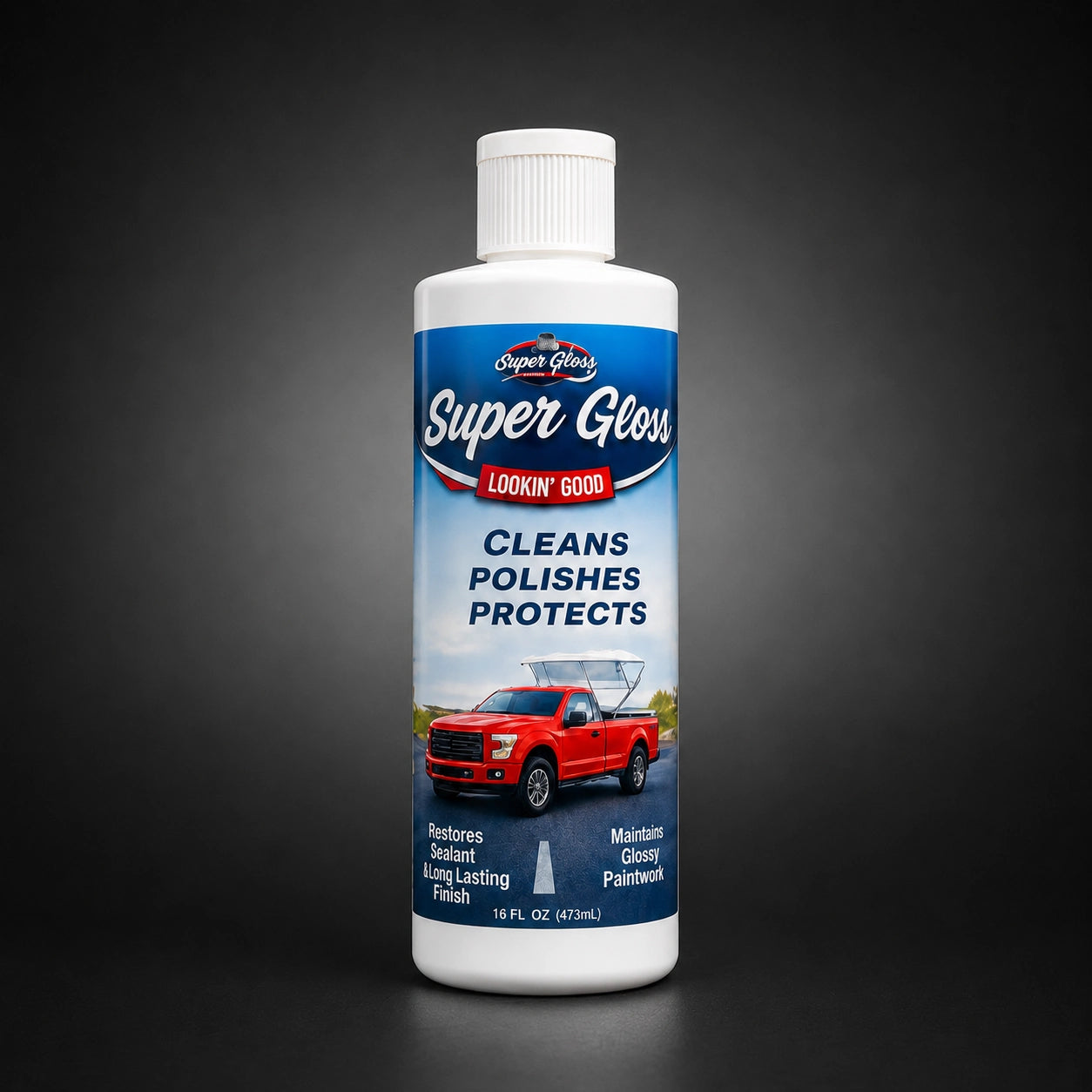
One Polish. Multiple Surfaces.
Skip the need for separate detailing products. Super Gloss combines cleaning, polishing, shining, and sealing in one multi-surface formula.
Quick Answer
Car polish corrects paint. Its fine abrasives remove a microscopic layer of clear coat to smooth swirl marks, light scratches, and oxidation. Car wax protects paint. It adds a thin, sacrificial layer that boosts gloss and guards against UV, water, and grime. If you use both, polish first, then wax. Healthy paint usually needs only wax.
- Polish corrects. Use it only when you can see a defect.
- Wax protects. Re-apply regularly, roughly every 2-3 months on a daily driver.
- Order matters. Polish first, wax second, never the reverse.
- Compound is a stronger polish, not a substitute for wax. It handles heavier defects and always needs a follow-up step.
- You don't always need both.
What's the Difference Between Car Polish and Car Wax?
The difference between car polish and car wax is what each does to the paint. Polish removes a tiny amount of clear coat to level out damage, so it fixes problems. Wax adds a layer on top of the paint, so it protects and adds gloss but cannot fix damage. Polish is corrective and occasional. Wax is protective and regular.
|
|
Polish |
Wax |
All-in-one polish & sealant |
|---|---|---|---|
|
Main job |
Corrects paint defects |
Protects and adds gloss |
Light correction plus protection |
|
How it works |
Fine abrasives level the clear coat |
Sits on top as a sacrificial layer |
Mild abrasives plus sealant polymers |
|
Removes swirls and light scratches? |
Yes |
No (can hide them temporarily) |
Very light ones only |
|
Protects the paint? |
Not meaningfully |
Yes |
Yes |
|
Removes clear coat? |
A microscopic amount |
No |
Minimal |
|
How often |
Only when needed, 1-2 times a year at most |
Every 2-3 months (product dependent) |
Every 2-3 months |
|
Best for |
Dull, swirled, oxidized paint |
Healthy paint that needs protection |
Regular maintenance in one step |
Is It Better to Polish or Wax a Car?
Neither is better, because they do different jobs. The real question is which one your paint needs right now, and that depends on its condition.
|
Your situation |
What to do |
|---|---|
|
Paint is healthy, glossy, and water beads tightly |
Wash and wax or seal only. Skip polish. |
|
Water sheets off flat |
The protection has worn out. Re-wax or re-seal. |
|
Visible swirls, haze, or dull, faded paint |
Polish first, then wax or seal. |
|
A deep scratch that catches your fingernail |
Polish won't fully fix it. Consider touch-up paint or a professional repair. |
|
Heavy oxidation or neglected paint |
Compound, then polish, then seal. |
|
Matte or satin finish |
Don't polish or wax. Use products made for matte paint. |
|
Selling the car or heading to a show |
Wash, clay, polish if needed, then wax or sealant. |
|
You want low-effort upkeep |
Wax alone, or an all-in-one polish and sealant. |
If you're asking “should I wax or polish my car?”, run these three checks first. They take five minutes and stop you from polishing paint that doesn't need it.
- The light test. In direct sun or under a phone flashlight, look for fine circular swirls or a hazy, dull look. Dark paint shows them most. If you see them, you likely need polish.
- The fingernail test. Run a fingernail across a scratch. If it doesn't catch, the scratch is shallow and may polish out. If it catches, it is likely too deep for polish.
- The water test. Spray water on the paint. If it beads up tightly, your wax is still working. If it sheets off flat, it's time to re-wax.
Wax or Polish First?
Polish first, then wax. Polishing corrects and prepares the surface, and waxing seals it. Reverse them and the polish abrasives strip off the wax you just applied, while the wax locks in the defects underneath. It's always polish and wax, in that order.
The full order for a thorough job:
- Wash and dry the car.
- Clay the paint (optional but recommended).
- Compound, only if you have heavier defects.
- Polish.
- Wipe the panel clean so polishing oils don't get in the way of bonding. Use a panel-prep wipe or diluted isopropyl alcohol, following the product maker's guidance.
- Apply sealant, if you're using one, and let it cure as directed.
- Apply wax on top, if you want the warm gloss.
Two exceptions: one-step products (cleaner wax and all-in-ones) combine correction and protection in a single pass, and sealant-then-wax layering is fine once the sealant has cured.
What Does Car Polish Do?
Polish is corrective. It contains abrasives that level the surface of the clear coat, removing a very thin layer along with the damage in it. That's why paint looks brighter and clearer afterward: you're reflecting light off a fresh, smooth surface instead of a weathered one.
Polish is the right tool for swirl marks from improper washing or drying, light scratches and marring, oxidation and faded-looking paint, and water spots that have etched into the surface.
Some polishes also contain fillers or oils that temporarily hide marks, which is why swirls can seem to return after a few washes. Important: polish does not protect. After you polish, the paint is clean and smooth but bare, so it needs wax or sealant right away.
What Does Car Wax Do?
Wax is protective. It creates a barrier between your clear coat and what damages it: UV rays, bird droppings, tree sap, road grime, and moisture. It also fills microscopic imperfections, makes paint look glossier and more uniform, and makes the car easier to wash.
- Carnauba wax comes from a palm tree. It's known for a warm, deep glow but wears off faster.
- Synthetic sealants are polymer-based and generally last longer.
What wax can't do is fix damage. Wax over swirl marks gives you shiny swirl marks. Wax works with the surface you give it.
Polishing Compound vs Polish vs Wax
Compound is the strongest of the correction products. Think of it as a heavier-cut polish: more abrasive, faster at removing damage, and rougher on the clear coat.
|
|
Compound |
Polish |
Wax |
|---|---|---|---|
|
Purpose |
Heavy correction |
Refining and light correction |
Protection and gloss |
|
Abrasiveness |
Highest |
Low to medium |
None (cleaner waxes are mildly abrasive) |
|
Fixes |
Heavier swirls, oxidation, deeper marring |
Light swirls, haze, dullness |
Nothing, though it can hide fine marks temporarily |
|
Protects the paint? |
No |
No |
Yes |
|
Leaves the paint |
Slightly hazy and bare |
Clear, glossy, and bare |
Protected and glossy |
|
Follow with |
Polish, then wax or sealant |
Wax or sealant |
Nothing; re-apply later |
Compound vs wax: they aren't alternatives. Compound removes material and wax adds a layer. Using compound alone leaves the paint hazy and unprotected.
Compound vs polish: terminology varies by brand. “Rubbing compound” usually means the most aggressive option, “polishing compound” a milder one, and “finishing polish” the finest. Check the cut or abrasiveness rating on the label rather than relying on the name.
Which to start with: begin with the least aggressive product that works and step up only if it doesn't. Test a small spot first. Compound removes more clear coat than polish, so use it sparingly, and expect to follow it with polish and then protection.
Is Polish the Same as Wax?
No. Polish corrects paint and wax protects it. The confusion comes from bottles labeled “polish & wax,” from cleaner waxes, and from people using “polish” loosely to mean “make it shiny.” One caution: automotive polish is not the same thing as furniture, shoe, or floor polish. Don't use household products on car paint.
Polish with Wax: Cleaner Wax and All-in-One Products
A cleaner wax or all-in-one product contains mild abrasives for light cleaning and smoothing, plus protective ingredients such as sealant polymers or wax. You get a little correction and then protection in a single pass.
Good for: regular maintenance on paint in decent shape, saving time, and beginners who don't want a multi-product process.
Not the best for: deep scratches or heavy oxidation, where a dedicated compound is stronger, and show-car results, where separate dedicated products are the better tool.
Grandpa Bosch's Super Gloss Polish & Sealant is built for this maintenance use. It cleans, lightly polishes, shines, and seals in one step, and it works on multiple surfaces beyond paint. Browse the car collection or see the how-to-use page.
When choosing any all-in-one, look for light correction plus real protection, clear directions, and a result that fits your routine.
Polish vs Wax vs Sealant vs Ceramic Coating
If you're weighing waxing vs polishing vs ceramic coating, remember that polish is a prep step and the other three are protection options.
|
|
Polish |
Wax |
Sealant |
Ceramic coating |
|---|---|---|---|---|
|
Job |
Corrects |
Protects, warm gloss |
Protects, longer life |
Semi-permanent protection |
|
Typical life |
Correction lasts until new damage |
About 4-8 weeks (carnauba) |
About 3-6 months |
About 1-3 years or more |
|
Effort |
Medium to high |
Low |
Low to medium |
High (heavy prep) |
|
Relative cost |
Low to medium |
Low |
Low to medium |
Higher |
How they layer: polish comes before any of them. A cured sealant can sit under a wax. For ceramic coatings, polish and decontaminate first, and once coated you generally don't need wax on top. Follow the coating maker's maintenance instructions.
How Long Does Each Last?
Durability depends on the product, the weather, and how often you wash the car. Typical ranges:
- Polish: the correction lasts until new damage appears. Gentle washing and drying keep it longer.
- Carnauba wax: roughly 4-8 weeks
- Synthetic sealant: roughly 3-6 months
- Ceramic coating: roughly 1-3 years or more, depending on the product and care
You'll often see “every 2-3 months” quoted for wax in general. That's a blended average across carnauba and synthetic products. What actually shortens life is harsh sun, snow, road salt, outdoor parking, frequent washing, and strong detergents. Instead of watching the calendar, use the water test: when beading turns to sheeting, re-apply.
When NOT to Polish or Wax
Skip polishing if:
- There's no visible defect. Polishing healthy paint removes clear coat for no benefit.
- You have matte or satin paint. Polishing can permanently change the finish.
- The scratch doesn't pass the fingernail test. Polish won't fully remove it.
- You've polished recently. Every pass removes a little clear coat.
- You're working near panel edges and body lines, where paint is thinnest.
Skip waxing if:
- The car has been freshly repainted. Follow your paint shop's guidance, often 30-90 days.
- The surface is dirty. Waxing over grime traps it and can scratch.
- The panel is hot or in direct sun. The wax dries too fast and streaks.
- The surface is textured plastic or rubber trim, where wax leaves white residue.
How to Polish and Wax a Car (Step by Step)
What you'll need: car wash soap, two buckets (helpful), a clay bar or clay mitt with lubricant (optional), painter's tape, microfiber towels, foam applicator pads, polish, and wax or sealant. A dual-action polisher is optional.
- Wash and dry the car thoroughly. Work in the shade on cool panels. Polishing over dirt scratches the paint.
- Decontaminate (optional but recommended). A clay bar with lubricant removes bonded grit that washing leaves behind, which would otherwise be dragged across the paint.
- Mask trim and edges. Tape off rubber, textured plastic, and sharp panel edges.
- Do a test spot. Try the least aggressive product on a small area first.
- Apply polish to a pad. A few pea- or dime-sized drops is enough.
- Work in small sections, about 2 ft × 2 ft. By hand, use overlapping straight lines with light, even pressure.
- Wipe off residue with a clean microfiber towel and check the result in good light. Repeat only if needed.
- Wipe the panel clean to remove polishing oils before sealing.
- Apply wax or sealant in a thin, even coat. Thin is better; thick coats are harder to remove and don't protect more.
- Let it haze, then buff. Wait for the time on the label, which is usually minutes, not hours. Swipe a finger across a small spot. If it wipes clean, buff the rest with a fresh towel.
Hand vs machine:
- By hand is the safest for beginners and fine for light haze and applying products. It has limited correction power and takes effort.
- Dual-action (DA) polisher is far more effective on swirls and is forgiving for beginners.
- Rotary polisher cuts fastest but can burn paint without experience. Leave it to experienced users.
For a deeper walkthrough, see How to Polish a Car at Home?. If you're worried about overdoing it, read How Many Times Can You Polish a Car Before the Clear Coat Is Gone? and How Often Should You Polish Your Car by Hand?
Do the Same Rules Apply to Motorcycles, Boats, and Other Surfaces?
The principle carries over: correct first, protect second. The surfaces differ, though. Boat gelcoat tends to oxidize to a chalky look and often needs correction before protection. Motorcycle paint, chrome, and clear-coated plastics vary. Matte finishes need their own products. Always check the label for the surfaces a product is made for. Grandpa Bosch's Super Gloss is formulated as a multi-surface product, so check its product page for the surfaces it suits. For boats, see How to Buff and Wax a Boat?.
Common Myths
“Wax causes swirl marks.” No. Poor washing and drying cause them. Wax can make existing swirls easier to see because the surface is more reflective.
“Polish ruins your paint.” Used correctly and occasionally, polish removes only a microscopic amount. The risk comes from overusing aggressive products or poor machine technique.
“More wax means more protection.” One thin, even coat does the job. Extra layers mostly waste product.
“Wax removes scratches.” It can fill and hide very fine marks for a while, but it can't remove them.
“Polish protects the paint.” Not meaningfully. Polish leaves paint clean and bare, so follow it with wax or sealant.
“Expensive always beats affordable.” Price doesn't guarantee performance. Look at abrasive level, durability, and ease of use.
The Simple Approach
For most drivers, healthy paint needs a wash and regular wax or sealant. Reach for polish only when you can see a defect, and use compound only for heavier damage. If you want maintenance with less effort, an all-in-one product every couple of months keeps things looking good without taking your whole weekend. Consistency beats complexity.
Want a simple one-step option? Shop Grandpa Bosch's Super Gloss Polish & Sealant →
Frequently Asked Questions
Is it better to polish or wax a car?
They do different jobs. Polish fixes defects; wax protects. Polish if the paint has swirls, scratches, or dullness. Wax if the paint is healthy and needs protection. Ideally, do both in that order.
What goes on first, polish or wax?
Polish first, then wax. If you polish after waxing, you remove the wax. Whether you ask “wax first or polish first?” or “do you wax or polish first?”, the answer is the same.
Can I wax my car without polishing?
Yes. If the paint is in good shape, wax alone gives protection and shine. Polish is only needed to correct visible defects.
Is waxing necessary after polishing?
Yes. Polishing leaves the paint clean but unprotected, so wax or sealant should follow.
Is polish the same as wax?
No. Polish corrects paint with mild abrasives. Wax adds a protective layer on top.
Is polishing compound the same as polish or wax?
No. Compound is a more aggressive polish for heavier defects, and it is not a protectant. Follow it with polish, then wax or sealant.
What's the difference between rubbing compound and polishing compound?
Rubbing compound usually has the heaviest cut, and polishing compound is milder. Naming varies by brand, so go by the product's stated cut level.
Does car polish remove scratches?
It can remove or reduce light scratches and swirl marks. Deep scratches that catch your fingernail usually need professional repair.
Can wax remove scratches?
No. Wax can fill and hide very fine marks temporarily, but it doesn't remove them. Cleaner waxes have mild abrasives and can help with light surface marks.
Does car polish protect paint?
Not meaningfully. Polish leaves paint clean and bare, so apply wax or sealant afterward.
Does car polish damage paint?
Occasional polishing won't damage healthy clear coat, but it removes a tiny amount each time. Overpolishing, heavy abrasives, or poor technique can thin it. Don't polish matte or satin paint.
How often should I polish or wax my car?
Wax roughly every 2-3 months, or when water stops beading. Polish only when needed, generally no more than once or twice a year.
How long does car wax last?
Carnauba typically lasts about 4-8 weeks and synthetic sealants about 3-6 months, depending on conditions.
How long does car polish last?
The correction lasts until new damage appears. Any fillers or oils in the product fade within weeks, so protect the paint with wax or sealant.
Does car wax expire?
Yes, eventually. Many waxes keep for a few years if stored sealed and away from extreme heat. Replace any that has separated, dried out, or smells off, and check the label.
Does wax protect against UV damage?
Yes. Wax and sealants add a barrier that helps protect paint from UV exposure, though they need regular reapplication.
Should I wax or polish a new car?
New paint is usually in good shape, so start with a wash and wax or sealant. Polish only if you see defects such as dealer-prep swirls. After a repaint, follow the shop's cure guidance before waxing.
Can I use an all-in-one polish and wax?
Yes, for regular maintenance and light defects. For heavy correction, use a dedicated compound and polish first.
How long should I wait before buffing off wax or polish?
Follow the product label. It's usually minutes, not hours, and humidity and temperature change it. Use the swipe test: if a finger swipe wipes clean, it's ready to buff.
What does wax do for clear coat?
Clear coat is the glossy, protective top layer of your paint. Wax sits on top of it and shields it from UV, water, and contaminants. It doesn't replace the clear coat.
How much does it cost to polish or wax a car?
Doing it yourself costs only the products and your time. Professional paint correction costs considerably more, and prices vary by vehicle size, paint condition, and region, so get quotes.


